Camping, hiking, and other outdoor activities are always fun, but one thing that everyone loves—regardless of age—is the campfire. Campfires are where memories are made, stories are shared, and traditions are passed down. But if you’re new to outdoor life, campfires can also be a bit intimidating.
How do you build one? What if you can’t get it started? How do you make sure it’s out? What do you do if something goes wrong?
This guide covers the basics so you can become a campfire guru with confidence.
The Fire Triangle: What Makes a Fire Burn?
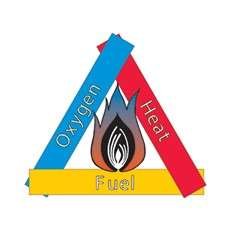
To build a proper campfire, you need to understand one fundamental concept: the fire triangle.
A fire requires three elements:
- Heat – Ignites the fuel and maintains combustion
- Fuel – Anything that will burn, such as paper, wood, or flammable liquids
- Oxygen – Creates the chemical reaction necessary for combustion
If even one of these elements is missing, the fire won’t start. Fuel is the easiest item to start with so let’s talk about your options when it comes to buikd
Building the Perfect Fire: Tinder, Kindling & Firewood
Now that we understand how fire works, let’s talk about the essential materials for building a campfire.
1. Tinder
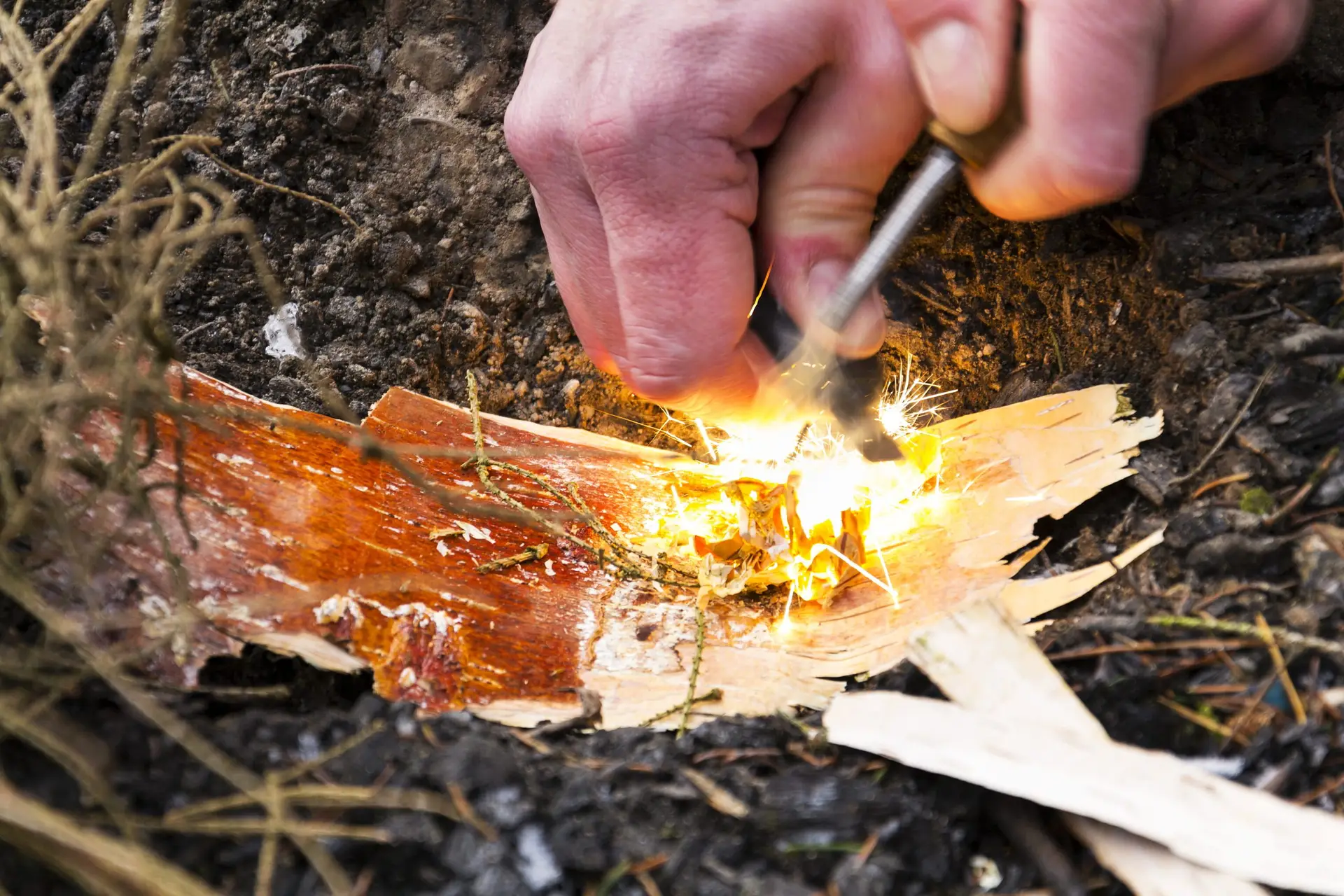
Tinder consists of small, easily combustible materials that ignite first, helping the fire take off. Examples include:
- Dry leaves
- Pine needles
- Dryer lint
- Cotton balls dipped in Vaseline
The key is dryness—wet tinder won’t light properly.
2. Kindling
Kindling is slightly larger than tinder and helps the fire grow. Use small sticks about the size of a pencil to ignite and sustain the flames.
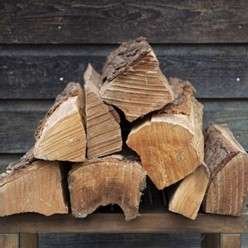
3. Firewood
Finally, firewood keeps the fire burning steadily. Start with small pieces, then add larger logs as the fire strengthens. Hardwoods like hickory and oak work well, but the most important factor is that your firewood is dry.
One important thing to consider before your trip is where to get your firewood. While buying firewood ahead of time is convenient, avoid purchasing it too far from your campsite. Transporting firewood long distances can spread invasive species, harming local ecosystems.
Where to Get Firewood
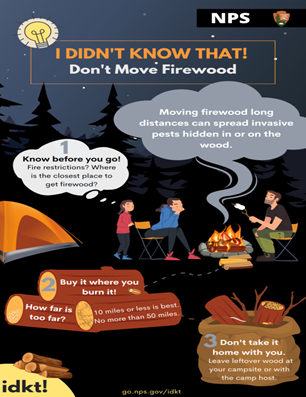
To prevent this, follow the “Don’t Move Firewood” campaign guidelines:
- Buy firewood at the campsite or a nearby store
- Avoid transporting wood more than 10 miles
- Choose local sources to support the economy and protect the environment
By buying firewood near your site, you’ll help prevent invasive species, support local businesses, and save packing space.
If you are visiting a State Park, the park office usually has firewood for sale. Bonus–this firewood has been dried, which saves you that hassle.
Campfire Safety
Before building your fire, keep these safety tips in mind:
✅ Choose a safe location – Avoid areas with trees, branches, or dry vegetation.
✅ Use a fire ring – If none is available, dig a shallow pit and line it with rocks.
✅ Have water and a shovel ready –You’ll need these to put the fire out.
✅ Teach kids fire safety – No roughhousing near the fire; supervision is required.
✅ Check for fire bans – Always check with rangers and local guidance before starting a fire.
✅ Never leave a fire unattended – Assign a fire monitor to manage the flames.
What Fire Structure Should You Use?
Campfires can be built in different ways depending on their purpose. Here are two common structures:
Cone-Shaped (Teepee Fire)
This classic structure is designed for efficient heat and light distribution. It’s an excellent choice for wet or windy conditions and works well for:
- Cooking small food items
- Boiling water
- Keeping warm
- Roasting marshmallows and s’mores
Log Cabin Fire
A rectangular fire structure that uses logs to build a long-lasting, stable fire. This design is best for:
- Sustained warmth
- Fires that need less tending
- Extended burn time without frequent adjustments
Here is a video from REI that shows different fire structures :
Final Thoughts
Now that you have everything you need to build a safe and successful campfire, it’s time to put your skills to the test. Have you ever had trouble starting a fire? Do you have a favorite campfire tip or a unique s’mores recipe? Share your stories in the comments below!
- About the Author
- Latest Posts

I have worked in the environmental education field for over 20 years, including work at zoos, aquariums, nature centers, and now state parks. My goal over the years has been to help people connect with nature and the animals that live there. I love taking people who find nature scary or intimidating and showing them how fun it can be. I have worked with wolves, cougars, monkeys, snakes, alligators, and sharks. My mom keeps asking me why I work with predators so much. She wishes I’d work with bunnies instead!
I love reading, scuba diving, kayaking, and anything else that involves water. I am not much of a hiker, but I love sitting in the forest and listening to the wind. I will travel anywhere you want me to go, and I genuinely believe seeing how others live, and love is the best way to understand others. One of my favorite memories is when I was accepted into a wolf pack that I worked with as a teenager. Two juvenile males sandwiched me between them and gave me a hug-—nothing like being the middle of a wolf sandwich!