Wildfires: Blazing Across the U.S. and Canada
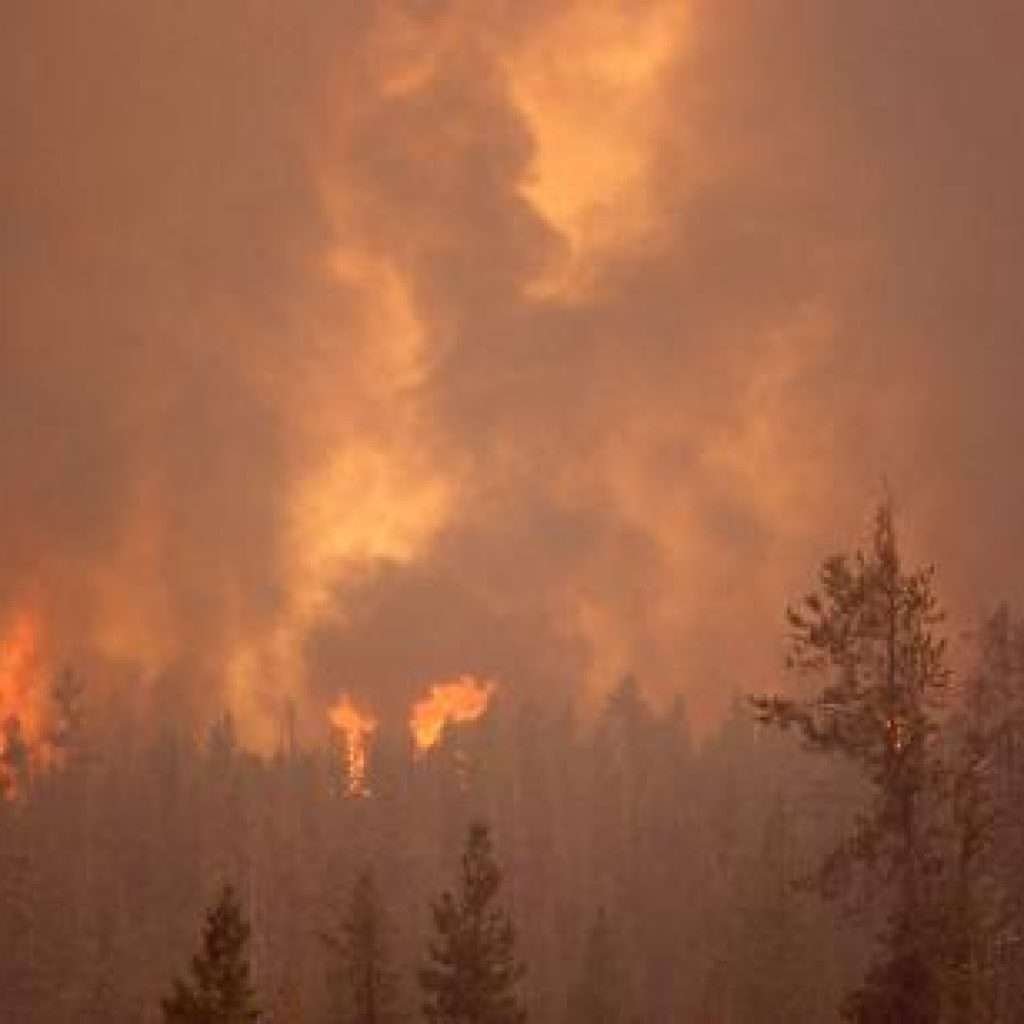
If it feels like wildfires have been dominating the news lately—well, you’re not wrong. From California to Texas, Oklahoma, Arizona, the Carolinas, and even New Jersey, wildfires have been burning across the country. This month Canada’s wildfires have been in the news as many of us experience smoke pollution and hazy skies.
And it’s not just the headlines that are heating up.
Since the beginning of 2025, over 1,240,993 acres have burned in the United States. There have been over 29,239 fires so far this year. In North and South Carolina alone, approximately 3,103 and 17,600 acres, respectively, have gone up in smoke. (source: https://www.nifc.gov/)
A huge portion of that was due to the Table Rock fire, which left a blackened footprint on the landscape.
But, how did these fires start?
While nature plays a role, the truth is that humans are responsible for the majority of wildfires. We’re talking campfires, arson, careless sparks, debris burning, and in the case of the Table Rock Complex fire–yep, you guessed it– a discarded cigarette.
Natural causes for fire include lightning strikes and volcanic eruptions.
Now layer that with climate change, storm-downed trees, and decades of total fire suppression, and you’ve got a recipe for larger, more intense wildfires.
🔙 Let’s Rewind: A History of Fire Suppression
Let’s hop into a time machine for a moment.
Back in the late 1890s and early 1900s, the U.S. was hit hard by several major wildfires. The public was alarmed. Congress responded swiftly—with a firm belief that all fire was bad fire.
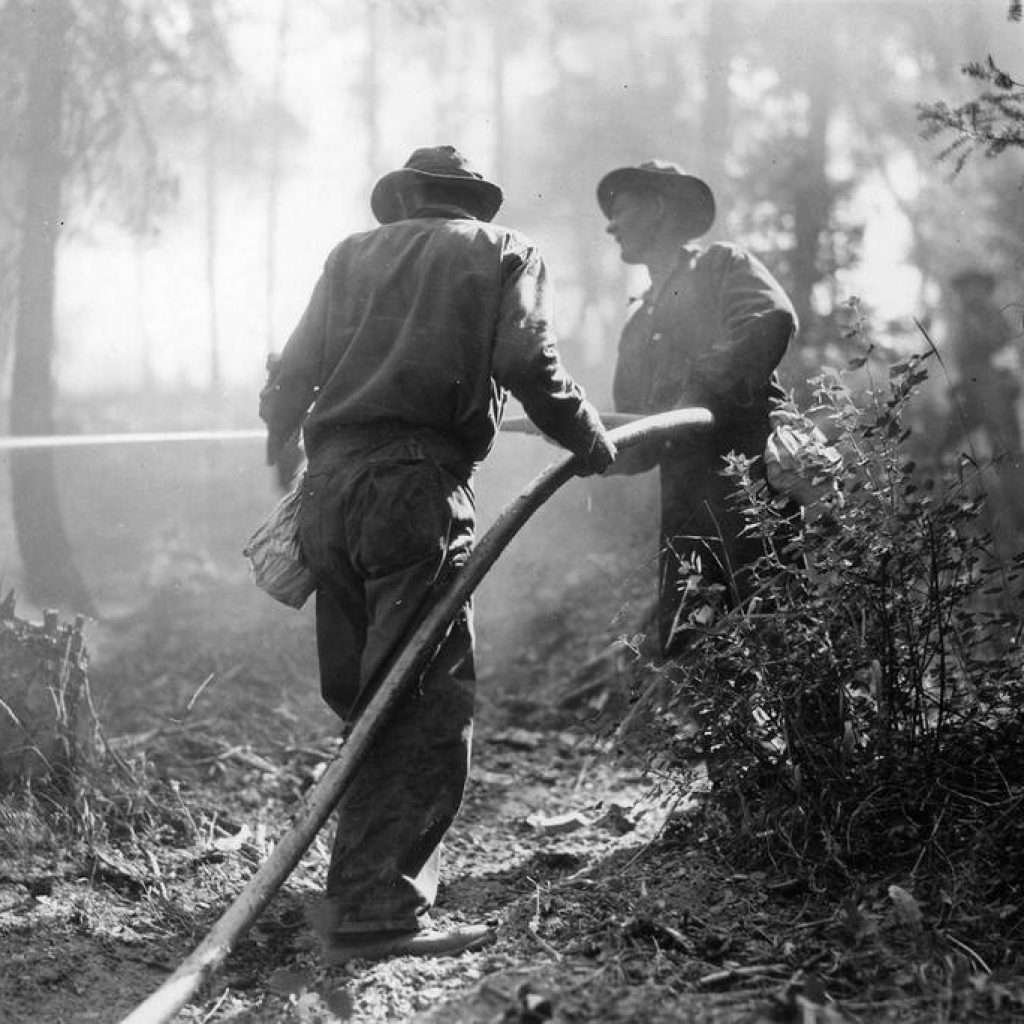
In 1911, the U.S. Forest Service got a serious budget bump, doubling its funds to fight fire on all fronts. The goal? Keep all fires out of the woods.
Fast forward to 1935, and the Forest Service had doubled down with what they called the “10 a.m. policy.” The rule was simple: any wildfire had to be fully extinguished by 10 a.m. the day after it was spotted.
And who was putting out these fires? Enter the Civilian Conservation Corps (CCC), a New Deal-era workforce that became the boots on the ground for this no-fire crusade.
States loved the policy. The country stuck with it. And for decades, the idea of “no fire ever” reigned supreme. (source: source: US Forest Service Suppression by the Forest History Society)
But—spoiler alert—forests need fire.
🌱 When Science Started Asking Questions
By the 1960s and 70s, scientists began to rethink the whole “fire is the enemy” story. A new field—Fire and Forest Ecology—started showing up in the research journals and classrooms. (source: US Forest Service Suppression by the Forest History Society)
And what did the data say?
Well, it turned out that fire could actually improve and restore ecosystems—especially when it was used thoughtfully and deliberately.
This revelation turned the tide. By the 1990s and 2010s, policymakers began updating their stance. In 1995 and again in 2014, the Forest Service officially allowed managers to use fire as a tool. This tool came with a name: prescribed burning (or controlled burns). (source: USDA Forest Service Prescribed Fire)
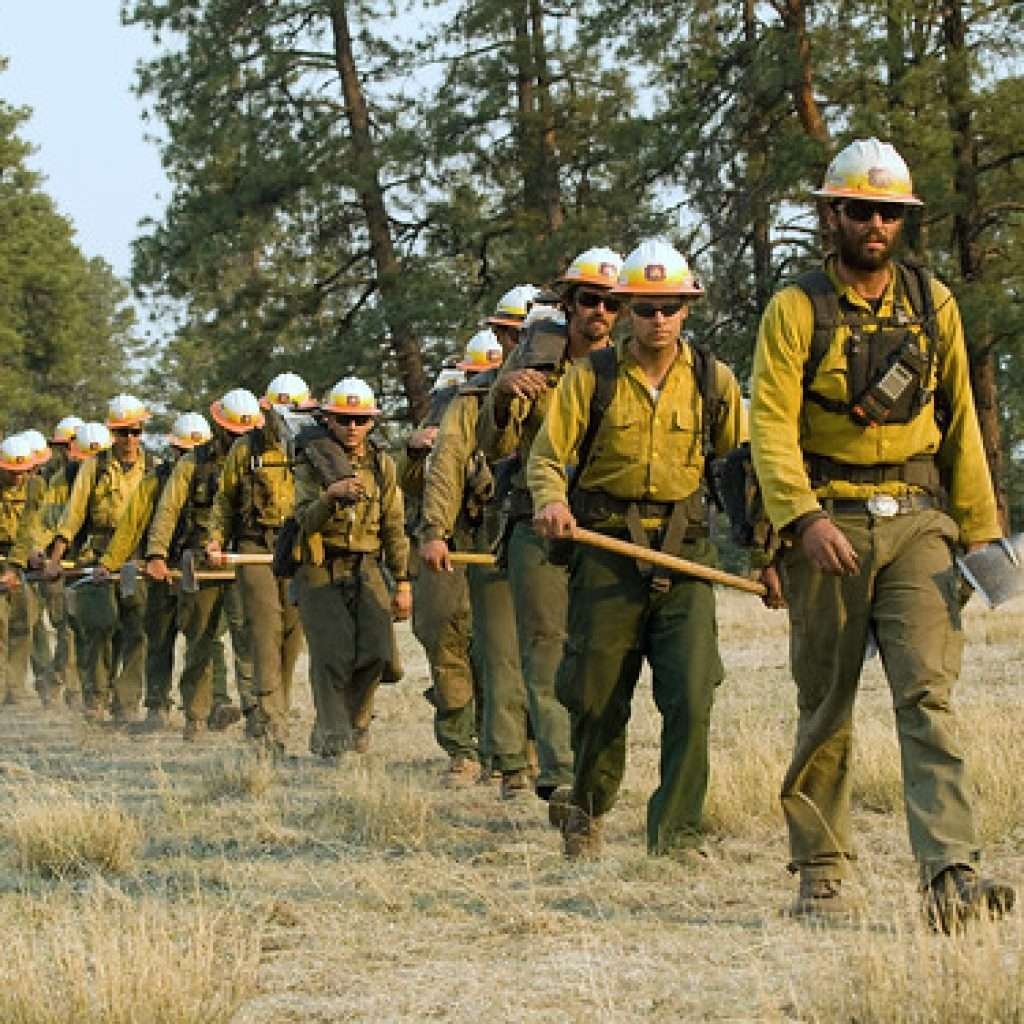
Prescribed Fire: Fighting Fire with Fire (Literally)
Let’s clear something up. Yes, uncontrolled wildfires are dangerous. They can destroy homes, wildlife habitats, and threaten human life.
But prescribed fires—when done by professionals—are a completely different story.
They’re intentional. Strategic. And in many ecosystems, totally necessary.
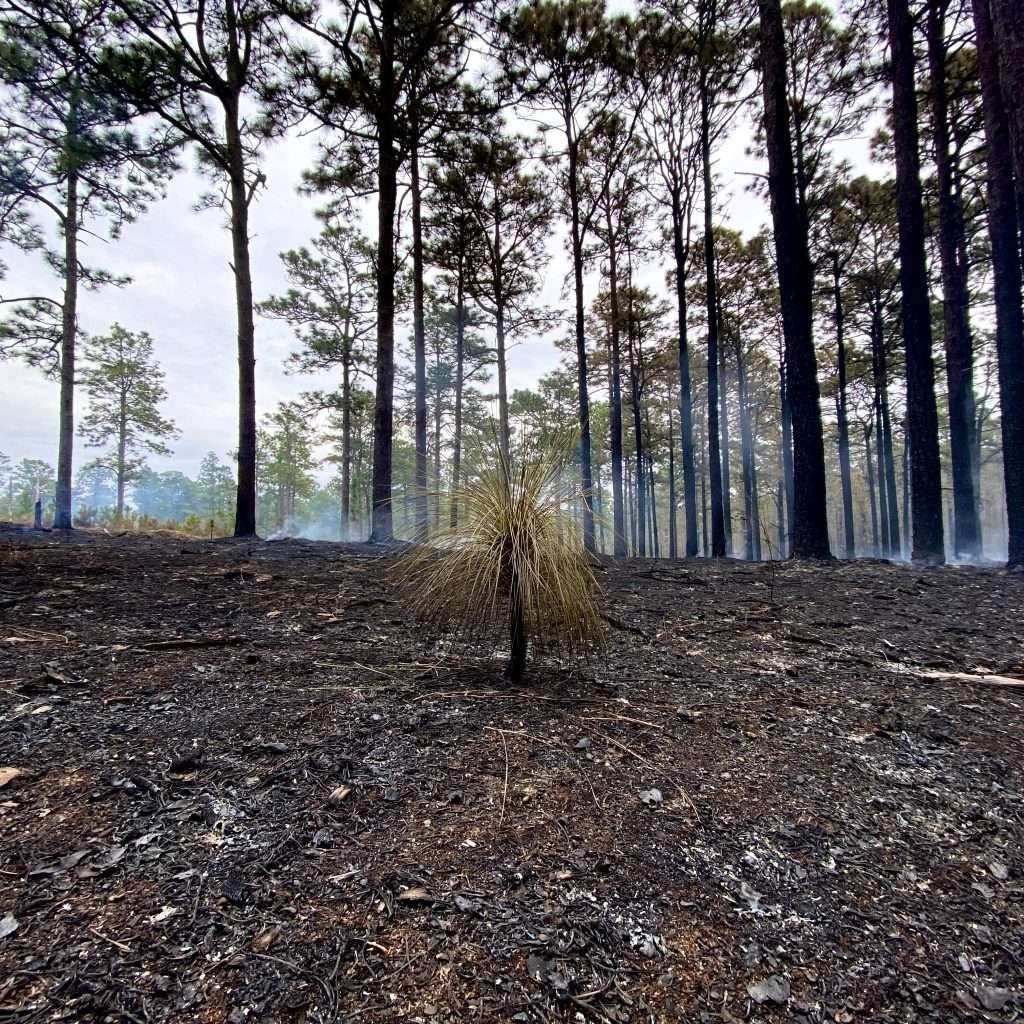
Take longleaf pine forests, for example. These environments have evolved with fire. They actually depend on it to thrive. Without periodic fires, longleaf pine seedlings struggle, and invasive species move in.
Here’s what prescribed burns help with:
- Reducing competition from non-fire-adapted species
- Clearing the soil so that new seedlings have a place to grow
- Recycling nutrients so that plants get what they need to regenerate
It’s nature’s reset button—when done right.
Bridging the Gap: Old Fears, New Knowledge
It’s easy to see fire as the enemy. For a long time, it was our national policy to stamp out every flame.
But science is showing us a different way. By embracing fire as a natural force—and not just a disaster—we can help heal and maintain healthy forests.
That means teaching the public, training professionals, and finding balance between caution and ecology. It means recognizing when to put out fires and when to let them burn—safely and intentionally.
Because sometimes, the best way to protect a forest is to let it burn.
“Fire destruction is one man’s job; fire prevention is everybody’s job.” Turner Drake
- About the Author
- Latest Posts

I have worked in the environmental education field for over 20 years, including work at zoos, aquariums, nature centers, and now state parks. My goal over the years has been to help people connect with nature and the animals that live there. I love taking people who find nature scary or intimidating and showing them how fun it can be. I have worked with wolves, cougars, monkeys, snakes, alligators, and sharks. My mom keeps asking me why I work with predators so much. She wishes I’d work with bunnies instead!
I love reading, scuba diving, kayaking, and anything else that involves water. I am not much of a hiker, but I love sitting in the forest and listening to the wind. I will travel anywhere you want me to go, and I genuinely believe seeing how others live, and love is the best way to understand others. One of my favorite memories is when I was accepted into a wolf pack that I worked with as a teenager. Two juvenile males sandwiched me between them and gave me a hug-—nothing like being the middle of a wolf sandwich!